Licensed to Grill: A Bold Design Asset for Graphics & T-Shirt Designs
A First Impression of Rustic Confidence
When I opened the Licensed to Grill file, my immediate reaction was one of clarity. This isn't a timid graphic design asset. It announces itself with a sense of rustic, hands-on confidence. The visual mood leans into Americana, outdoor living, and a grounded, authentic feel. It represents a style that's bold, slightly vintage, and unafraid to be the centerpiece. For a designer, this naturally fits clients rooted in craftsmanship, small-scale production, or community-focused branding—think a boutique BBQ sauce line, a local summer festival, an handmade business selling grill accessories, or an Etsy product launch for outdoor enthusiasts.
Testing Licensed to Grill in Real Client Scenarios
In practical terms, how does this asset perform? For logo design or brand identity, its strong, declarative nature makes it a contender for a primary or secondary mark for a food truck or a craft butcher. In packaging design, scaled down as a seal or emblem on a jar label, it injects instant character. For a full-size poster or flyer for a backyard cook-off event, it could serve as a powerful hero graphic.
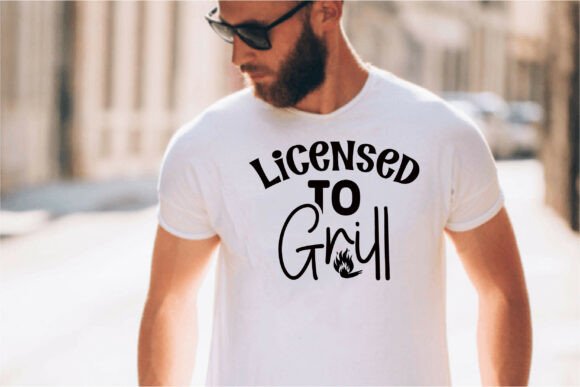
Its applications extend beautifully to merchandise and printable designs. As a t-shirt design, it’s inherently strong. For mugs, tote bags, or as a Cricut project for sticker design, the clean lines likely translate well. In digital realms, it could anchor website graphics for a catering website or become a standout Pinterest pin or Instagram post for a small business branding campaign. As part of a Canva template for social media, it provides a ready-made focal point.
The Strongest Layouts for This Graphic
Licensed to Grill works best where it has space to breathe. Use it in large layout areas: as a dominant element on a product mockup, a central illustration on a printable wall art, or as the key visual in a themed collection of campaign visuals. It excels as a decorative accent on packaging details, like a branded corner stamp. For social media graphics or digital ads, it can drive the entire visual hierarchy when placed against a simple background.
Where to Apply Caution in Your Designs
This asset demands careful application in certain contexts. At very small sizes, fine details may become lost, reducing its impact. Avoid crowded layouts where its boldness could clash with other complex elements. On complex backgrounds or in low-contrast designs, its definition could suffer. For projects requiring a minimalist branding approach or very professional corporate materials (like a formal annual report), its stylistic weight might feel mismatched. The key is ensuring it supports, not overwhelms, the project's core message.
Impact on Brand Perception and Practicality
Using Licensed to Grill affects a project's perceived professionalism and emotional appeal. When used appropriately, it builds visual trust with an audience seeking authenticity. It enhances brand consistency for a line of products all centered around a core theme. For audience engagement, its clear, recognizable style can quickly attract attention. However, in a design requiring subtle readability and layered information, it should be used as a supporting brand element, not the primary text carrier.
Essential Designer Checks Before Client Use
Before committing this digital product to a real client project, run these practical tests.
- Test it in black and white: How does it hold up without color? This is crucial for applications like budget printing or embossing.
- Check contrast on light and dark backgrounds: Place it on both white and a dark charcoal to ensure legibility and impact remain high.
- Preview it at small and large sizes: See how it looks as a 1-inch web icon versus a 24-inch poster print.
- Place it on real mockups: Drop it onto a t-shirt, mug, or packaging template to judge its real-world fit.
- Test print quality: If the project involves physical goods, print a sample to check for crisp edges.
- Review the file formats: Confirm the provided SVG design allows for vector editing if you need to tweak colors, or that the PNG design has clean transparency for overlays.
- Compare it with different font styles: Pair it with a simple sans-serif font for a modern mix, or a serif font for a more traditional feel. See how it interacts with script or handwritten fonts.
- Confirm commercial licensing: Absolutely verify the commercial license terms for using this design asset in client work, print-on-demand sales, or other commercial design applications.
Final Judgment: A Specialty Asset with Clear Purpose
My review of Licensed to Grill concludes with a clear perspective. This is a specialty design bundle with a defined purpose. It won't be the right fit for every project in your studio. But for that specific client—the local grill master launching a sauce line, the community center hosting a summer fair, the creative marketplace seller curating a rustic-themed digital seller collection—it offers a powerful, polished starting point. It can elevate a visual concept from generic to character-filled, saving design time and providing a cohesive creative design anchor. As a professional, recognizing its strengths and its boundaries is key to deploying it successfully, making it a valuable graphic design asset in the right toolkit.