Bless My Chickens: A Design Review for Embroidery Projects
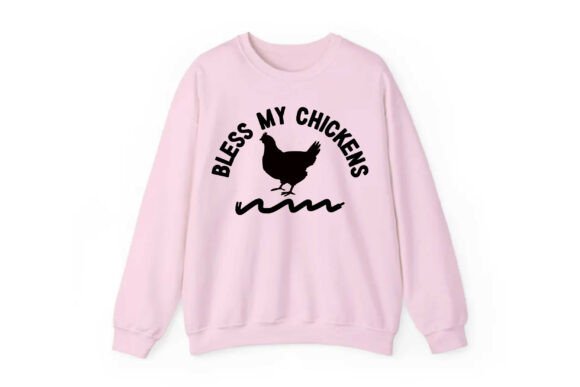
If you're like me, you scroll through countless embroidery designs looking for one that feels both charming and commercially savvy. Bless My Chickens immediately catches your eye with its friendly, down-home personality. It's not a sterile, generic graphic; it feels like a sincere little sentiment, perfect for that niche customer who loves their backyard flock or finds humor in rural life.
The First Impression: Where This Design Naturally Belongs
Opening this file, you get a sense of its intended mood. The layout suggests a cheerful, slightly whimsical declaration. This isn't a high-detail, realistic portrait of poultry; it's a graphic with a personality. That tells me its strength lies in applied decoration, not fine art. I picture it instantly on a cozy, well-loved item. A kitchen towel in a farmhouse-style boutique. A canvas tote bag for a gardener. A soft sweatshirt for someone who truly does bless their chickens. It's a design that turns a simple garment into a conversation piece.
Real-Life Scenario: Crafting a Boutique Tote Bag
Let's walk through a real project. Imagine you're preparing a custom embroidered tote bag for a small shop client. They want something unique for their loyal customers. You hooped your sturdy canvas bag, chose a crisp white thread for maximum pop, and loaded Bless My Chickens. As the machine runs, you're watching not just for errors, but for the final effect. The charm here is in the clear, readable statement. On a product like this, the design works because it’s legible and lighthearted. A customer buying this tote isn't just buying a bag; they're buying a little piece of shared identity or humor. That's where the value multiplies.
Performance Across Real Embroidery Situations
This design category, T-Shirt Designs and Graphics, typically means it's built for broad application. In my experience, Bless My Chickens would perform reliably on standard custom apparel like t-shirts and sweatshirts, provided you use the correct stabilizer for the fabric weight. It likely shines on flat, stable surfaces.
Think of these potential homes: a child's apron for helping in the coop, a pillow cover for a rustic decor bedroom, a tea towel as a genuine farmhouse gift. For baby clothes or nursery decor, it could be a sweet, personal touch if the family has that connection. As an embroidered patch, it could be incredibly versatile, applied to caps, bags, or jackets. For holiday gifts—think Mother's Day for a chicken-loving mom—it adds a personalized, handmade presentation that generic gifts lack.
For your craft business, whether Etsy listings or craft fair products, this design fills a specific niche. It can help build brand consistency if your shop focuses on rural, humorous, or animal-themed products. The visual appeal is in its specificity; it engages a buyer looking for exactly that sentiment.
Where to Exercise Caution and Skill
As an experienced designer, I'd proceed carefully in a few scenarios. If the design has any tiny lettering or very dense decorative accents, you must test it first. Small hoop sizes might compromise clarity. On textured fabrics like some sweaters, or stretchy fabrics without proper stabilization, the clean lines could distort. Dark fabric requires impeccable thread color contrast planning—a simple white or bright yellow might be necessary.
Embroidering on curved surfaces like caps demands attention to how the design layout accommodates the curve. Also, consider products needing frequent washing. A design with very high stitch density on a lightweight t-shirt might pucker or wear differently. The key is to match the design's character to a suitable product. This feels like a design for durable, often-displayed items.
Affecting Your Business and Customer Trust
Using a graphic like this well affects more than just the stitch. A clean, professional embroidery result builds customer trust. It shows you understand how to execute a design properly for the final product. When a client sees Bless My Chickens neatly stitched on their ordered apron, they see a finished product worthy of its price. It enhances the handmade presentation by looking intentional and skilled, not haphazard.
For giftability, it scores high—it's personal and niche. For recognition, it's memorable because it's not overly common. This directly impacts buyer engagement in your small shop; people stop scrolling when they see something that speaks directly to them.
Practical Designer Notes Before You Hoop
My standard process for any new embroidery file like this involves a few crucial steps. I always, always test it on scrap fabric of the same type I plan to use. This checks for any unforeseen issues with stitch density or small details. I review thread color contrast thoroughly, sometimes testing the design in a black and white mockup to see if the layout holds up without color.
I confirm the hoop size needed and inspect the file for any intricate corners that might need machine speed adjustment. Using proper stabilizer is non-negotiable; it’s the foundation of quality. Crucially, I check whether the design's licensing permits my intended use—whether for personal gifts or commercial projects. The product description states it can be used for many purposes, but as a professional, I need to confirm the specifics before selling finished items or using it in digital product previews for my shop.
The Final Stitch: A Design with Clear Purpose
Bless My Chickens stands out as a graphic with a defined audience. Its value in your embroidery project comes from aligning it with the right product and executing it with care. It’s not a universal, every-occasion design, but its strength is that specificity. In the right context—on a tote bag, a kitchen linen, or a personalized gift—it transforms from a simple digital file into a finished product with character and appeal. For the maker focusing on niche, heartfelt, or humorous items, it’s a digital asset worth having in your library, ready to bless someone’s project, and perhaps, their actual chickens.